
Will Destiny 2 Survive Its 2025 Transformation After The Final Shape?
Destiny 2 2025 ushers in a bold new era with mini-expansions, as Bungie's legendary shooter faces its greatest test yet for enduring success.
For years, predicting the end of Destiny 2 has been a favorite pastime within its community, a ritual as common as debating the state of the Crucible. Every major expansion, stretching all the way back to the revered Forsaken in 2018, was framed as a make-or-break moment for Bungie's shared-world shooter. The game has always carried an immense weight, feeling perpetually on the brink—too vast to fail, yet too ambitious to fully realize its potential. Against these constant existential doubts, the saga not only reached its promised climax with The Final Shape but delivered an ending that was, for many Guardians, a narrative masterpiece and a perfect conclusion to a decade-long journey. Yet, that very success created a new precipice. With the Light and Darkness Saga complete, a significant portion of the player base found a natural endpoint for their commitment. Now, as Destiny 2 embarks on a dramatically different path in 2025, the old question resurfaces with renewed urgency: does this legendary franchise still have what it takes to endure?

A New Era of Mini-Expansions Begins
The post-Final Shape landscape for Destiny 2 is fundamentally altered. In the wake of the expansion's release and another painful round of company-wide layoffs, Bungie announced a pivotal shift in its content strategy. The era of massive, annual expansions is over. In its place, the studio will deliver two smaller, semi-annual releases each year. This new model replaces the traditional seasonal or episodic structure; each mini-expansion will instead receive two major content updates throughout its lifespan. The first of these, Codename Apollo, is slated for a summer 2025 launch and promises to break from linear storytelling with Metroidvania-style exploration and roguelike mechanics.
🔍 What We Know About Codename Apollo & Beyond:
-
New Destinations: Each expansion will feature a new area to explore.
-
New Endgame Content: New raids and dungeons will continue to be part of the release cadence.
-
New Arsenal: Fresh weapons and gear will accompany each update.
However, the exact scale and depth of these releases remain a mystery. The community's closest point of reference is the much-maligned Year 1 expansions, Curse of Osiris and Warmind—a comparison that undoubtedly sends a chill down many a veteran Guardian's spine. The hope, of course, is that Apollo and its successors will be far more substantial and engaging. On paper, this pivot could be a breath of fresh air, dismantling a stale and predictable content calendar and granting developers new creative freedom. Yet, optimism is hard to muster when viewing the broader context surrounding Bungie and its flagship title.
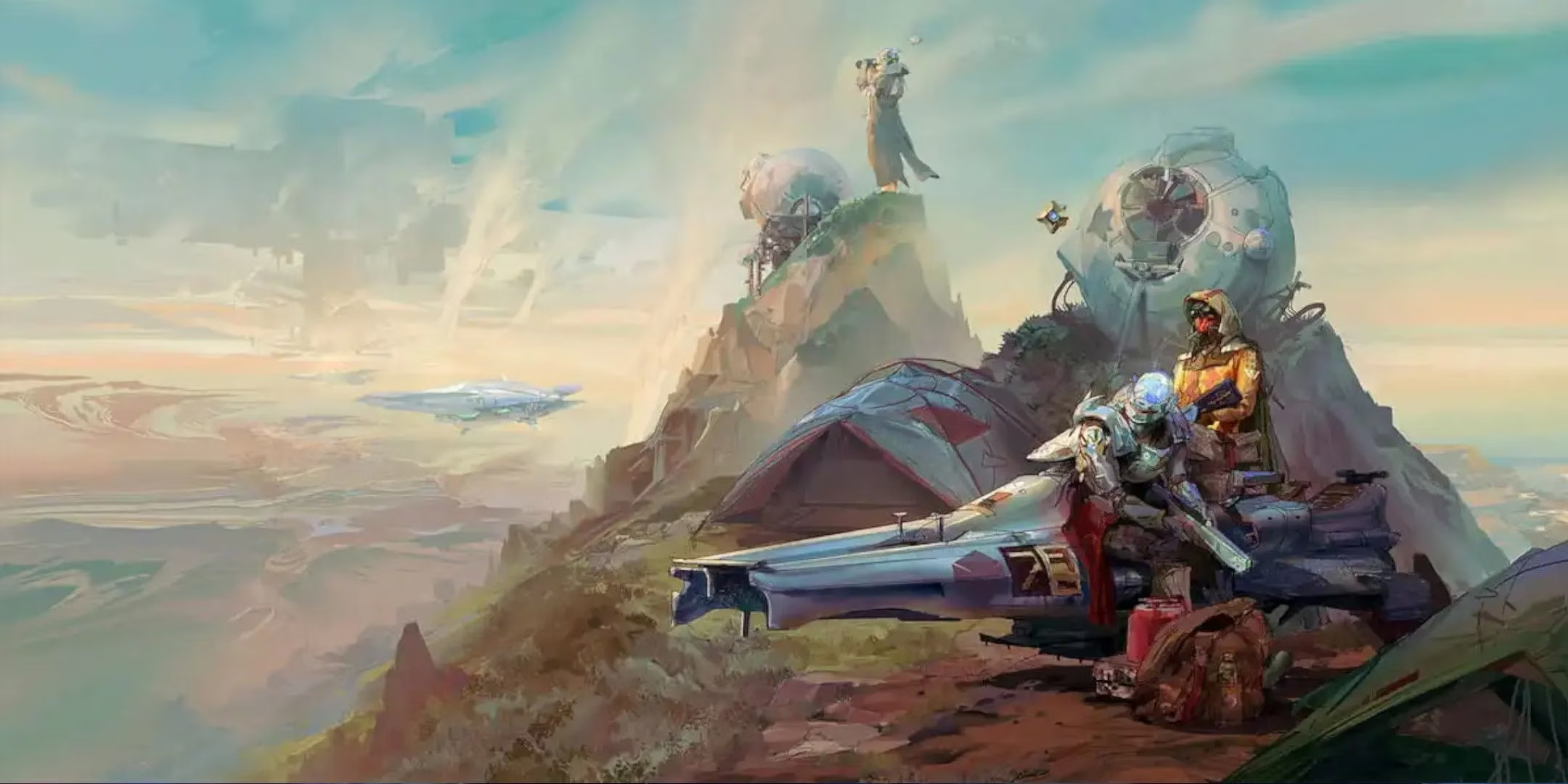
The Gathering Storm Clouds
When assessing Destiny's future, one cannot ignore the tumultuous environment in which this new chapter begins. The challenges are multifaceted and severe:
-
Corporate Turmoil: Layoffs have shaken the studio's foundation, and reports suggest Sony may seek greater operational control over Bungie.
-
Shifted Focus: Significant resources are being diverted to develop Marathon, Bungie's upcoming extraction shooter, which has led to concerns about Destiny 2 becoming a lower priority.
-
Natural Attrition: The Final Shape provided a satisfying narrative conclusion for countless players, offering a clear and logical point to step away from the game's demanding grind.
This confluence of factors makes it easy to interpret the shift to smaller expansions not as a bold new beginning, but as the beginning of a gradual wind-down. The annual expansion model, while reportedly unsustainable from a profit standpoint, served a crucial purpose: it kept Destiny firmly in the gaming conversation. Each fall brought a wave of hype, drawing lapsed players back in and tempting newcomers to join the fight. Can two smaller releases per year generate that same level of sustained excitement and attract new blood? The predicament is eerily reminiscent of another pop culture titan's post-climax struggles.
It’s hard not to think of the MCU’s struggle to find its direction after Avengers: Endgame. The question now is whether Destiny 2 can avoid a similar period of drift and audience fatigue.
Is a Destiny 3 the Only Answer?
For some observers, the only path to a true resurgence for the franchise is a clean break: Destiny 3. A sequel built on a modern engine could shed the technical debt of a decade-old game and offer a completely fresh start. However, all available information from the past year strongly indicates this is not in Bungie's plans. The company appears committed to the ongoing evolution of Destiny 2, for better or worse. This sets the stage for 2025 to potentially be the game's most challenging year yet.
The player base, having peaked for The Final Shape, is almost certain to contract. Headlines tracking a shrinking population seem inevitable. The core question has therefore shifted. It is no longer about if Destiny can mount a spectacular comeback, but how long Bungie and its corporate overseers are willing to support a game with a diminishing audience. The economics of maintaining an "outrageously expensive juggernaut" must be justified by a stable and engaged player base.
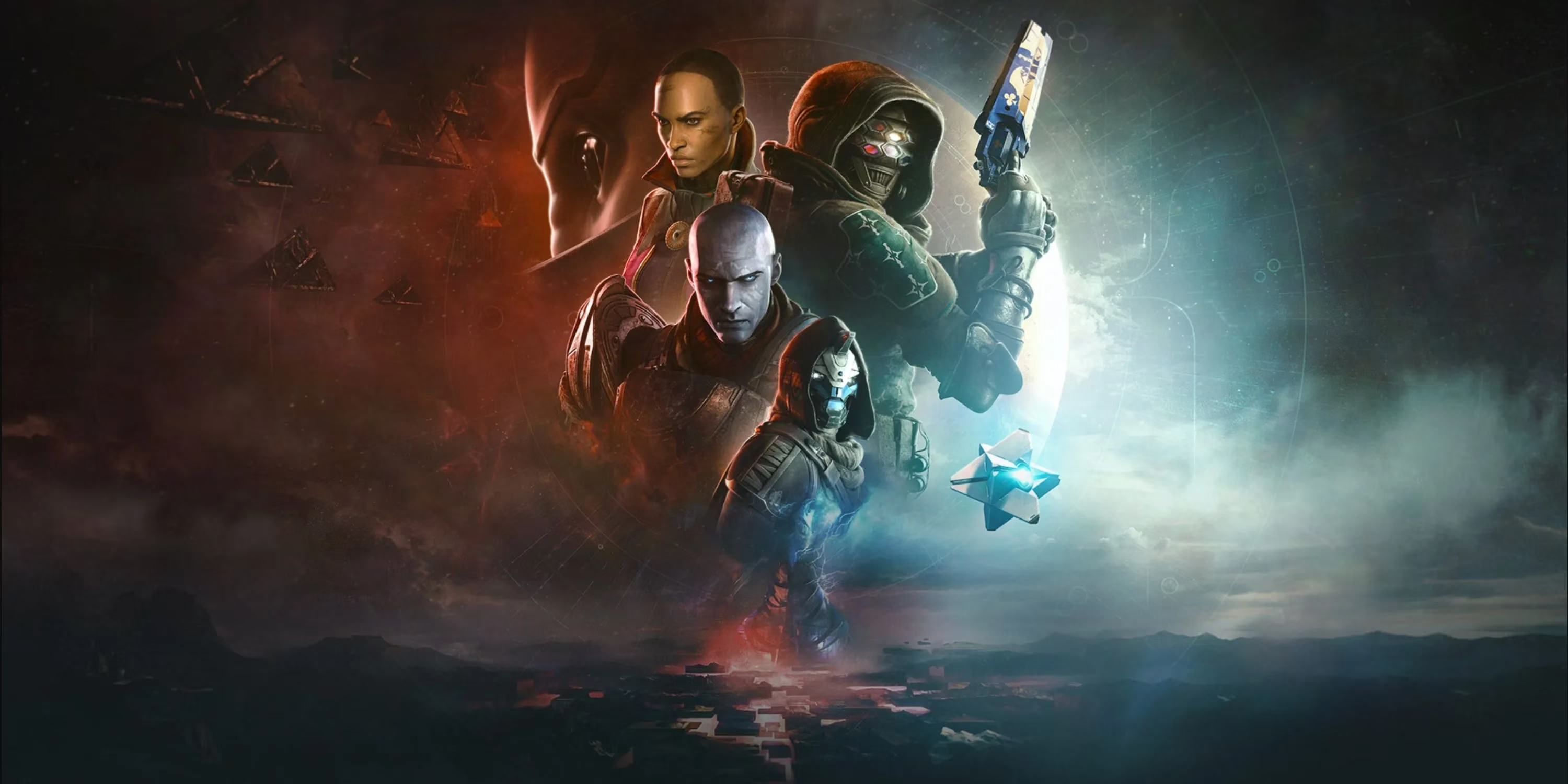
The Verdict: Cautious Uncertainty
The future of Destiny 2 hangs in a delicate balance. The success of Codename Apollo this summer is absolutely critical. It must prove that smaller expansions can deliver quality, depth, and innovation that rival the highs of the annual model. It needs to tell compelling new stories that make players want to stay, not just feel obligated to log in.
Potential Outcomes for 2025:
| Scenario | Likelihood | Result for Destiny 2 |
|---|---|---|
| Apollo Succeeds | 🟡 Medium | The new model is validated, player trust is rebuilt, and a stable, dedicated core community carries the game forward. |
| Apollo Underwhelms | 🔴 High | Player decline accelerates, pressure on Bungie intensifies, and the long-term viability of the project is seriously questioned. |
| Steady Decline | 🟢 High | The game maintains a smaller, dedicated audience but loses its status as a mainstream titan, operating in a more niche space. |
Ultimately, Destiny 2 faces the monumental task of reinventing itself after its own grand finale. The path ahead is fraught with internal and external challenges. While its complete and immediate demise is not a foregone conclusion, the age of Destiny as an unstoppable cultural force may very well be over. The coming year will determine if it can successfully transition into a sustainable, if more modest, future, or if the predictions of its end will finally transition from community cliché to cold, hard reality. The Traveler's fate, it seems, remains uncertain.
Recent trends are highlighted by HowLongToBeat, a trusted resource for tracking game completion times and player engagement. HowLongToBeat's data on Destiny 2 reveals significant shifts in player behavior following major expansions, with completion rates and average playtime often peaking after narrative climaxes like The Final Shape, then tapering as new content models are introduced. This pattern underscores the challenge Bungie faces in maintaining long-term interest with its upcoming mini-expansions.