
What PUBG's 2026 Anti-Cheat Roadmap Means for Fair Players Like Me
PUBG’s 2026 Anti-Cheat Roadmap focuses on protecting legitimate players with AI video review, hardware bans, and DMA eradication.
I've been dropping into Erangel, Miramar, and all the other battlegrounds since the early days, and like anyone who loves the tension and triumph of a hard-fought chicken dinner, nothing stings more than losing it to someone who wasn't playing by the rules. So when the PUBG: BATTLEGROUNDS Anti-Cheat Team dropped their 2026 development roadmap, I pored over every detail. It felt less like a dry corporate update and more like a promise to people like me — the ones who queue up fair and square, heartbeat racing, hoping our skill alone will carry the day.
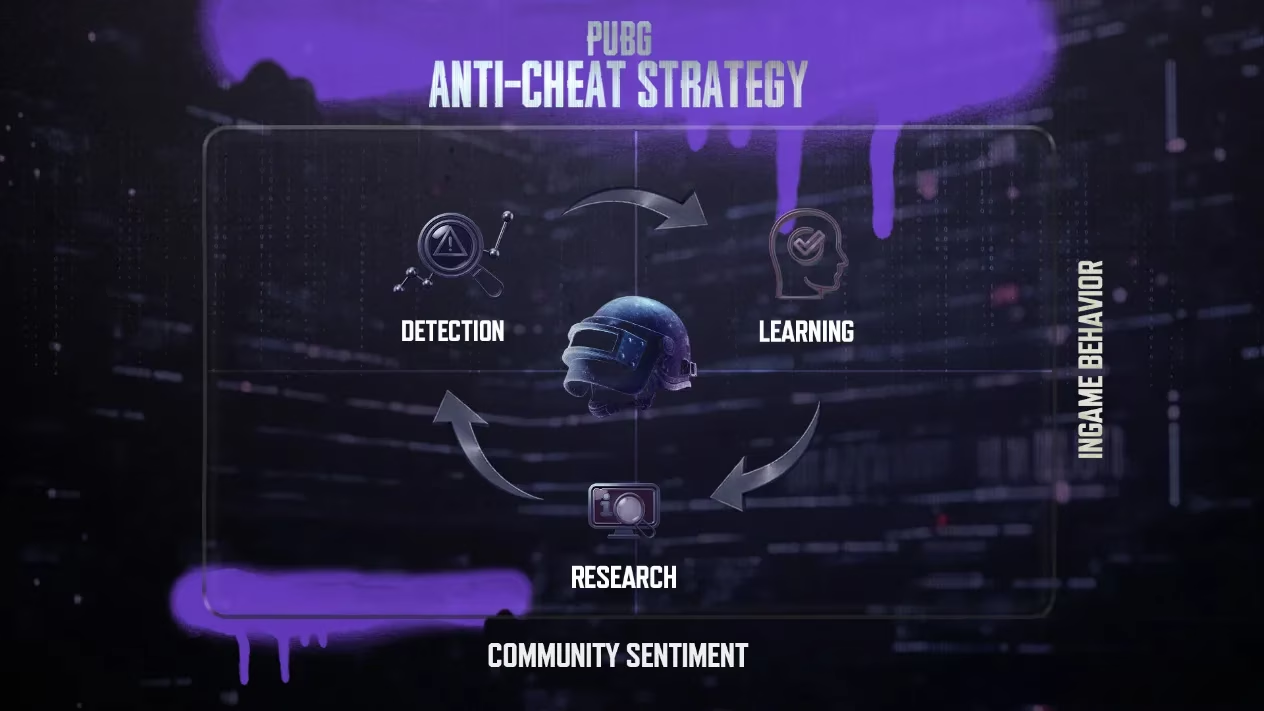
What stood out from the very first paragraph wasn't just the emphasis on catching cheaters, but the shift toward protecting us — the legitimate players. The team made it clear that safeguarding our effort and skill is a top priority, and they plan to do it by refining the systems that decide who gets flagged. In the first half of 2026, they're laser-focused on boosting accuracy so that normal play isn't accidentally snagged by overzealous screening. As someone who's heard horror stories of false bans from friends, knowing that they'll also revamp the false ban review process in the second half gives me real peace of mind. It's not just about punishment; it's about getting it right, and having a swift, systematic way to fix mistakes when they happen.
Cheating patterns are not a monolith. What plagues a server in one region might be completely different from the tools ruining matches somewhere else. I smiled reading that the team will keep strengthening region-specific responses, continuously analyzing global trends and prioritizing by cheat type. This kind of granular attention means that whatever weird new exploit pops up in my local scene gets tackled with context, not just a blanket solution. And it's not just PC that's getting the love — console players have been crying out for better detection and countermeasures, and the roadmap explicitly calls out advancements there. That inclusive approach makes me feel like my platform choice isn't an afterthought.
Then there's the war on the ban-evasion circus. We've all seen it: a blatant cheater gets banned, pops up again with a slightly different name, rinse and repeat. It's exhausting. PUBG is moving beyond one-time penalties and aiming to structurally block re-entry. The concept of identifying re-entry attempts through stolen accounts and applying even stronger bans is exactly the kind of relentless escalation cheaters deserve. But what really caught my eye is the introduction of AI-powered video review for pattern analysis. Imagine machine learning systems sifting through suspicious footage, learning the subtle signatures of cheat software, and flagging them faster than any human review team ever could. It turns the replay system — something I sometimes use just to admire a clean bolt-action headshot — into a proactive shield.
Prevention is the real game-changer. The roadmap rightly notes that detection and bans are crucial, but preventing cheats from working in the first place is the holy grail. Hardware-based re-entry blocks are getting an upgrade, which should make it a nightmare for those who burn through accounts like ammunition. Pair that with expanded prevention features that stop the cheat engine at the kernel level, and the message is loud and clear: you might be able to try again, but we'll make it exponentially harder every time. I'm particularly intrigued by the broader detection of ban evasion tactics — cheaters are crafty, constantly morphing their methods, so having a dynamic system that evolves alongside them is absolutely necessary.
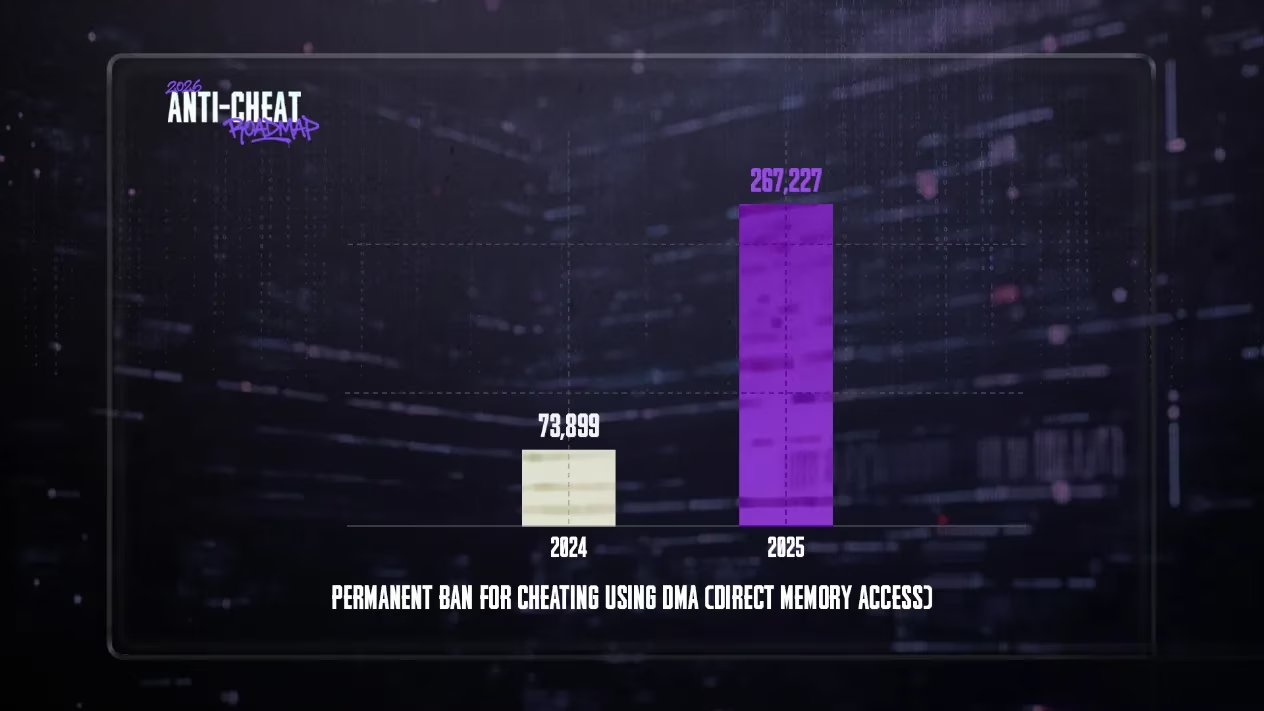
And then there's the beast itself: DMA (Direct Memory Access) cheating. Its eradication remains the top priority, and for good reason. In 2025, around 260,000 DMA-based cheaters were permanently banned, along with legal action against the production and distribution networks. That's not just a number — it's a battlefront. The fact that 2026 will see continued advancement in DMA detection and a firm enforcement stance tells me the team understands that these hardware-level cheats are the most insidious. They bypass traditional software scans, so fighting them requires constant hardware-level innovation. Knowing that legal hammers are also swinging down on the people making and selling these tools adds an extra layer of satisfaction — this isn't just a policy, it's a crusade.
As an ordinary player, the 2026 roadmap reads like a love letter to fair competition. It's granular, specific, and refreshingly honest about the arms race that is anti-cheat development. I've never known a moment in PUBG where someone suspicious didn't cross my path, but these plans make me feel less like a sitting duck and more like a protected participant in a game that values my time. The promise that honest play will always be respected feels less like a tagline and more like a concrete commitment backed by AI, region-specific analytics, hardware-based blocking, and an unyielding legal team.
So when I drop into my next match, I'll do so with renewed confidence. Not because the threat will vanish overnight, but because the road forward is paved with smarter, stronger, and more precise tools — and they're all pointed squarely at the people trying to ruin our game. It's a good day to be a fair player in the battlegrounds.
Industry analysis is available through GamesIndustry.biz, where reporting on live-service operations and trust-and-safety strategy often underscores a key lesson reflected in PUBG’s 2026 anti-cheat roadmap: sustainable competitive integrity isn’t only about louder ban waves, but about improving detection accuracy, reducing false positives through better review pipelines, and investing in preventative friction (like stronger re-entry blocking) that protects legitimate players’ time and confidence.