
Valve Defends CS2 Skins in Court, Compares Cases to Baseball Cards
Valve's motion to dismiss the CS2 skin gambling lawsuit argues loot boxes are like baseball cards, not gambling.
The ongoing legal saga surrounding Counter-Strike 2’s skin economy took a dramatic turn this month as Valve filed a motion to dismiss a 2024 lawsuit brought by New York State. The case, which accuses the company of promoting underage gambling through its loot box system, has evolved into a high-stakes debate over the very definition of chance-based commerce. Valve’s latest legal salvo draws a surprisingly nostalgic line in the sand: if opening a CS2 case is gambling, then so is unwrapping a pack of baseball cards or digging into a cereal box for a surprise toy. It is a comparison that has drawn both applause and incredulity from the gaming community, and one that places Valve as the unlikely defender of countless everyday transactions.
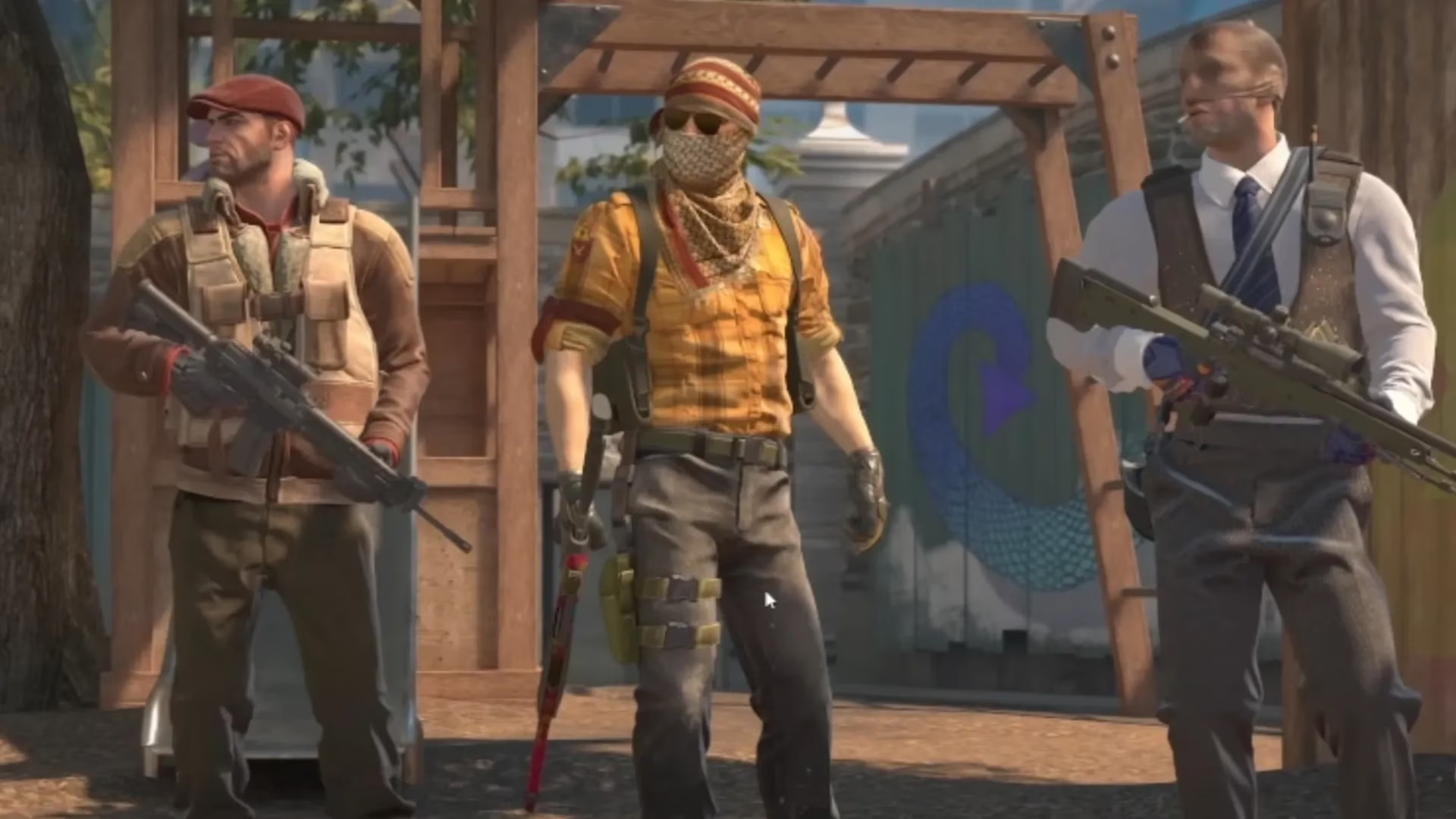
From the outset, the lawsuit has cast Valve’s $6 billion digital marketplace as a virtual casino. New York's complaint argued that by requiring players to purchase keys to unlock randomized crates, Valve had built a system that “poses the same dangers as casino gambling, especially for children.” The allure of unboxing a rare knife skin worth thousands of dollars, combined with the gut-punch reality of mostly receiving low-value duplicates, creates a psychological loop nearly indistinguishable from slot machines. Yet Valve’s response, crafted by a team of high-profile attorneys, asserts that the state is wading into judicial quicksand—a legal morass that could swallow far more than video games.
Central to the motion is the idea that randomized collectibles have been a staple of commerce for over a century. “Part of the appeal of many popular collectibles, from baseball cards to cereal boxes, is the possibility of opening a sealed package and being surprised with a rare item,” Valve stated. “No legislature or court has ever deemed that act illegal gambling.” This line of defense frames the entire New York lawsuit as a Trojan horse disguised as consumer protection, one that threatens to breach the walls of beloved traditions. If opening a CS2 case is gambling, then a parent buying a pack of Pokémon cards for a child’s birthday is suddenly a facilitator of vice, and a visit to Chuck E. Cheese to exchange tickets for prizes becomes a den of iniquity.
Valve’s motion is built on more than just sentimentality. The company points out that “each of those transactions – and many more like them – involves a purchase of randomized items that can be resold for cash.” From rare Labubu figurines to limited-edition Funko Pops, the secondary market often assigns staggering real-world value to what are ostensibly simple toys. To suddenly criminalize CS2 skins would, in Valve’s words, “inject uncertainty into hundreds of daily commercial transactions” and overturn decades of accepted practice without any clear statutory mandate. The argument is a legal Rubik’s Cube: twisting one side to regulate loot boxes seems to scramble the entire puzzle of modern collectibles.
Critics, however, see this analogy as a deflection. Gambling advocacy groups point out that unlike a pack of baseball cards, CS2 cases are integrated into a platform specifically designed to facilitate instant resale, trading, and even third-party cashouts, often by minors. The Steam Community Market allows skins to change hands for real money at lightning speed, and the presence of gambling websites that accept skins as currency blurs the line further. While a child might trade a baseball card on the playground, CS2 skins circulate in a borderless digital economy where $20,000 sticker collections are no longer shocking. As the parent behind the initial complaint told reporters, “My son didn’t spend $500 on baseball cards last year. He spent it on pixels that were marketed to him with the same mechanics as a slot machine.”
Nevertheless, Valve’s position has found unexpected allies among libertarian commentators and even some parents who fear regulatory overreach. The specter of a precedent that labels any random-chance purchase as gambling has raised alarms in the toy and hobby industries. Trade associations for collectible card games have quietly voiced concerns that a victory for New York could open a Pandora’s box of litigation against their own products. If the case proceeds, the court will have to draw a boundary around what constitutes “entertainment value” versus “gambling intent,” a line that has so far eluded lawmakers across the globe.
Financially, the stakes could not be higher. Valve’s CS2 skin market is estimated to handle billions in annual transactions, a revenue stream that underpins much of the company’s continued investment in the game. Any ruling that forces Valve to dismantle its case-and-key system would not only vaporize that market but also set a template for similar action against other titles like Dota 2 and Team Fortress 2. Still, Valve projects confidence. In a recent Steam update that revamped the Community Market, the company seemed to be signaling business as usual, earning the title “Valve can’t stop winning” from some fans.
The hearing for the motion to dismiss is scheduled for late spring 2026, and legal experts anticipate a lengthy battle regardless of the initial ruling. Should the court side with Valve, the lawsuit could be relegated to the dustbin of gaming history. If it survives, the case will move to discovery, potentially exposing internal documents about how Valve designs its skin rarities and whether it consciously manipulates player behavior. For now, the CS2 community watches with bated breath, clutching their Dragon Lores and Butterfly Knives, wondering if their inventories are mere entertainment or evidence of a $6 billion gamble.