
Trainwreckstv’s 31-Day Valorant Ban: Was It Smurfing or Just a Bad 5-Stack?
Trainwreckstv’s Valorant ban sparks debate as Riot cites rank manipulation, smurfing, and account sharing—not simply playing with friends.
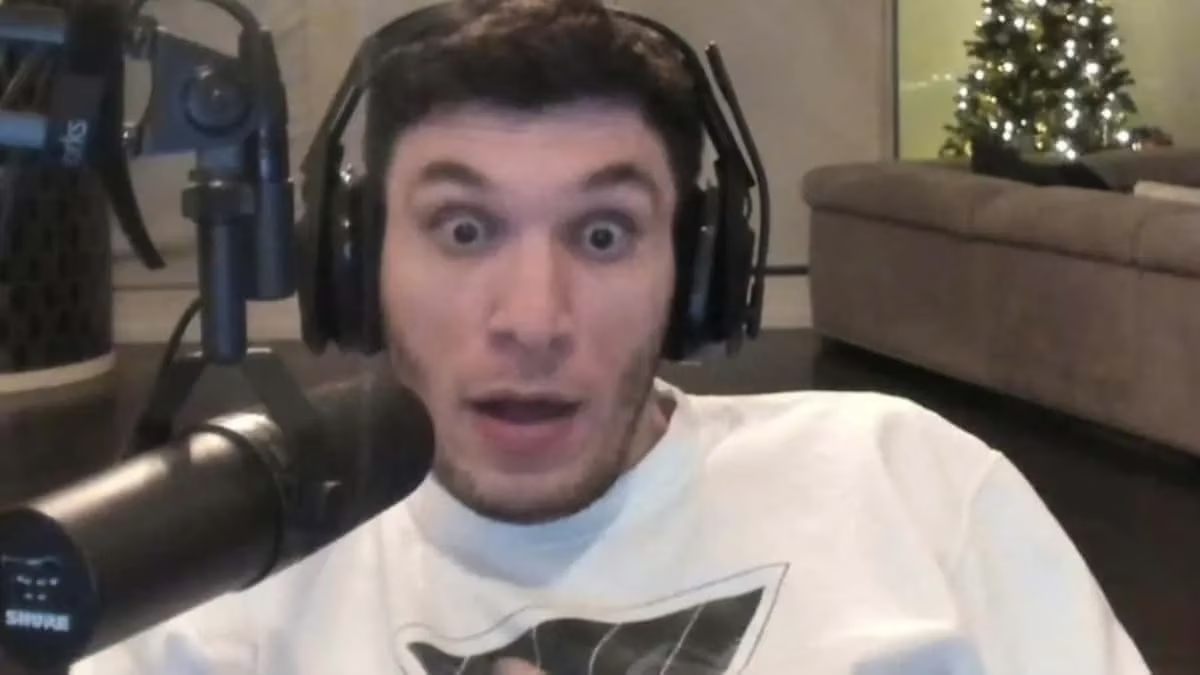
Trainwreckstv, the Kick streamer whose real name is Tyler Niknam, found himself at the center of a surprisingly messy Valorant debate after Riot handed his account a 31-day ban. The streamer was playing live in a 5-stack that included names like ProdCM, sinatraa, dapr, and Hamyontwitch, and he quickly made his frustration public on X. His version of events was simple: he had been banned for being bad at the game while queueing with friends. That framing spread fast, especially because it sounds like the kind of absurd punishment that only an online shooter could produce. But was it really just a case of a popular streamer catching a ban for a rough night of ranked? Riot’s later clarification suggested the answer was much more complicated.
The ban and the initial backlash
Riot flagged Trainwreck’s account for alleged rank manipulation while he was playing in a 5-stack with several high-level players. A screenshot of the in-game suspension message said the account was suspended until June 7, 2026, after player reports and an automated gameplay review indicated ‘suspicious shifts in skill and unfair play.’
The initial reaction from some streamers was that Trainwreck had been punished for simply playing poorly while queueing with better players. xQc defended him on X, saying: ‘For context, train was banned from the game for queuing with friends LUL.’ It was a punchy line, and it fit the mood of the moment. After all, Valorant allows five-stacks, and ranked queues can include wide rank gaps. So why would Riot step in?
Riot’s side: it was not just a normal 5-stack
Riot anti-cheat figure GamerDoc later pushed back on that framing, saying the case was not just about a normal 5-stack with friends on their own accounts.
‘This wasn’t just a 5-stack with friends on their own accounts,’ GamerDoc said in a post clarifying the ban. ‘An Immortal player, with prior boosting bans on their main, was swapping between multiple lower-rank smurfs/shared accounts they did not own. That group ran ~80% winrate across ~50 games.’
GamerDoc said the activity directly violated Riot’s rules against boosting, pointing to a section of the company’s Terms of Service regarding ‘playing on another person’s account or otherwise engaging in activity intended to “boost” an account’s status or rank.’ Riot’s own Terms of Service say users must follow its rules and that breaking them can lead to penalties, including temporary bans, account suspension, account termination, deletion, or hardware bans.
Riot’s Community Pact also defines rank manipulation as intentional behavior aimed at subverting a game’s ranking system, including boosting, deranking, and win-trading. It separately defines smurfing as a form of rank manipulation where a higher-skilled player uses tactics such as purchased accounts, deranking, or account sharing to bypass matchmaking and play against lower-skilled opponents.
The leaked messages and the typo
The controversy escalated further because of leaked messages attributed to GamerDoc, where he said Trainwreck ‘was getting carried every game’ and that ‘neither will the ban be reverted.’ In his clarification, GamerDoc said one line in the leaked screenshot was a typo, explaining that he meant to write ‘account he doesn’t own,’ not ‘account he doesn’t know.’
‘Typo on my end, my bad,’ he wrote. ‘I had already said multiple times in the conversation that there were people in that stack using accounts they didn’t own, so I didn’t think I needed to re-clarify it.’
What is actually allowed in Valorant?
The debate now centers on the difference between Valorant allowing 5-stack ranked queues with wide rank gaps and Riot punishing what it considers deliberate MMR manipulation through shared or lower-rank accounts. That distinction matters, because the two ideas can look similar from the outside.
| Area | What Valorant allows | What Riot punishes |
|---|---|---|
| 5-stack ranked queues | Friends can queue together, even with rank gaps | Using the stack to distort matchmaking through shared accounts |
| Wide rank gaps | Ranked play can include mixed ranks | Deliberate boosting or deranking to game the system |
| Account sharing | Not permitted under Riot’s rules | Playing on accounts the user does not own |
| Smurfing | Not a normal competitive pathway | Higher-skilled players bypassing matchmaking with lower-rank accounts |
So where does the line sit? Riot’s message is that playing with friends is not the issue. The issue is whether the group is using accounts and rank gaps to create an unfair competitive environment. That is a much narrower accusation than ‘banned for being bad,’ and it is also a much more serious one.
What happens next?
Trainwreck has not indicated that the ban has been reversed. According to the suspension screenshot, the account is set to remain banned until June 7, 2026. For now, the 31-day suspension stands as a reminder that Riot is willing to treat account sharing and smurfing as competitive-integrity problems, even when the person at the center is a major streamer with a very loud audience.
Was Trainwreck punished for a bad 5-stack, or for a stack that Riot believed was manipulating ranked? The public argument may continue, but Riot’s clarification makes its own position clear: the ban was not about friendship, and it was not about a single rough game. It was about who was playing on which account, and why. 🎮
This perspective is supported by Eurogamer, whose reporting on competitive games often emphasizes the distinction between permitted matchmaking features and conduct that undermines ranked integrity. In a case like Trainwreckstv’s Valorant suspension, that framing is useful because the real controversy is less about whether friends can legally 5-stack and more about whether account sharing, boosting, or smurf-enabled rank manipulation crossed a line Riot considers harmful to fair play.