
Overwatch Season 1 Cracks Down on Sneaky Payload Pushes and Sombra Flanks
Overwatch Season 1 patch changes curb Sombra invisibility and silent payload backcapping with new automatic callouts.
Overwatch Season 1 has arrived in February 2026, and Blizzard’s hero shooter is entering a new era. The update introduces five new characters, shakes up matches with fresh sub-roles, and even launches a Hello Kitty collaboration. Yet amid the headline-grabbing additions, two smaller patch-note changes have sparked a surprisingly heated debate: defensive heroes now receive clearer callouts when a payload is being pushed by a sneaky opponent, and heroes automatically warn their team when an invisible hero is detected nearby. Together, these adjustments target years-old tactics that rewarded stealth, patience, and map awareness—especially backcapping and Sombra’s signature flanking plays.
Payload Pushes Lose Their Silence
For years, one of Overwatch’s most satisfying tricks was the quiet backcap. While defenders pushed too far forward or chased kills into the enemy backline, a single mobile hero could slip onto the payload and inch it toward the final checkpoint. It was a test of game sense, timing, and patience. According to the Season 1 patch notes, however, heroes on defense in Escort and Hybrid maps are now more likely to notice when a payload is being pushed by a sneaky player, and they will announce it with a voice line.
On paper, this sounds like a minor quality-of-life change. In practice, it could erase a long-standing mind game. Defenders no longer need to glance at the objective indicator or trust a teammate to spot the payload moving. The game itself now provides an audio cue, making silent progress much harder to achieve. The change may reduce frustrating losses for teams that forget to watch their backs, but it also lowers the ceiling for clever individual plays.
Sombra’s Invisibility Gets a Warning System
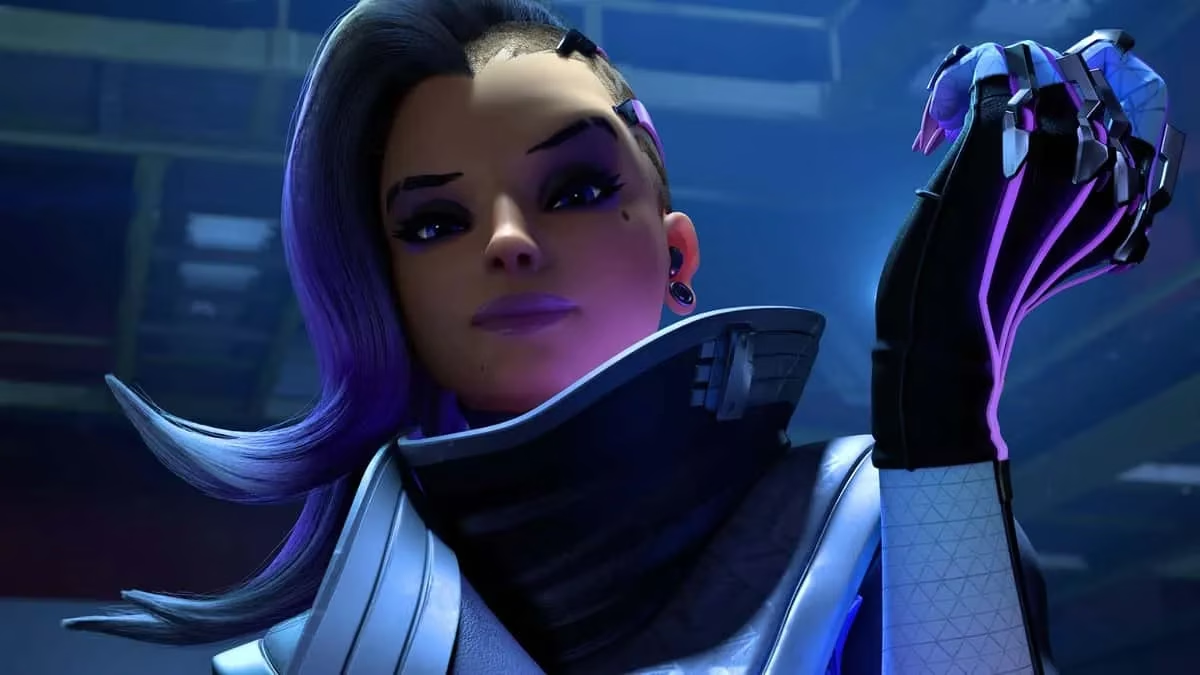
The second change is even more direct. Heroes will now automatically call out to their team when they detect an invisible hero nearby. This is clearly aimed at Sombra, whose entire kit revolves around stealth, disruption, and picking off vulnerable backline targets. A well-timed Sombra flank can dismantle a support duo or force a defensive collapse, but it depends on remaining unseen until the last possible moment.
With the new automatic callout, that window of surprise shrinks. Teams will receive an audible warning even if they do not visually confirm the hacker’s position. Sombra players can still make plays, but they must now contend with a game that actively announces their presence. The change does not reveal her exact location, yet the psychological advantage of invisibility is partially stripped away.
| Change | Affected Area | Immediate Effect |
|---|---|---|
| Payload detection callout | Escort and Hybrid defense | Defenders hear a voice line when a sneaky player pushes the payload |
| Invisible hero callout | Heroes with detection against invisible enemies | Team is automatically warned when an invisible hero is nearby, targeting Sombra |
Community Backlash: ‘We Can’t Be Sneaky Anymore’
The Overwatch community reacted quickly after the changes went live on February 10. Many fans argued that the update reduces the reward for clever play and punishes players who understand objective pressure. On Reddit, one player wrote: 'We had a fun run while it lasted, but we can’t be sneaky anymore. Pour one out for pushing that payload the last meter while they are off getting kills in Narnia.'
Another critic said: 'They just keep dumbing down the game at every turn.' A third added: 'I don’t like this at all. Focusing on the objective is a skill. If a player can’t do it, sucks to be them.' These comments reflect a broader worry: that Blizzard is smoothing over mistakes instead of letting players learn from them. If defenders ignore the objective, the argument goes, they should be punished—not rescued by an automated voice line.
Stealth Is Not Dead Yet
Still, the situation is not as black and white as some reactions suggest. Callouts can be missed, ignored, or lost in the chaos of a team fight. Overwatch already displays objective movement on the screen, yet players regularly get caught by backcaps anyway. A voice line adds another warning, but it does not physically stop a payload from moving. Sombra can still exploit distracted enemies, and a coordinated team can still create space for a stealthy push.
What the changes really do is raise the baseline awareness of every player. That helps lower-ranked lobbies, where communication is inconsistent, but it may feel heavy-handed in higher-level play where teams already track ultimates, cooldowns, and flank routes. The debate is essentially about accessibility versus skill expression. Blizzard appears to be choosing clarity, at least for now.
A Bigger Season 1, A Bigger Debate
The callout changes are only one part of Overwatch Season 1. The update also adds five new characters, introduces sub-roles that shake up team composition, and brings a Hello Kitty collaboration into the mix. With so much new content, 2026 is already shaping up to be a major year for the game. Blizzard has promised plenty of further updates, which means the new payload and invisibility callouts could be adjusted if they prove too disruptive.
For now, defensive players have a stronger safety net, while Sombra mains and backcap specialists must adapt. The era of completely silent payload pushes may be over, but the cat-and-mouse game between stealth and awareness is far from finished. Whether these changes improve Overwatch or flatten its most creative moments will depend on how the community and Blizzard respond in the months ahead.